Head of Standards & Practices Anita Kumar on Upholding Trust in Journalism
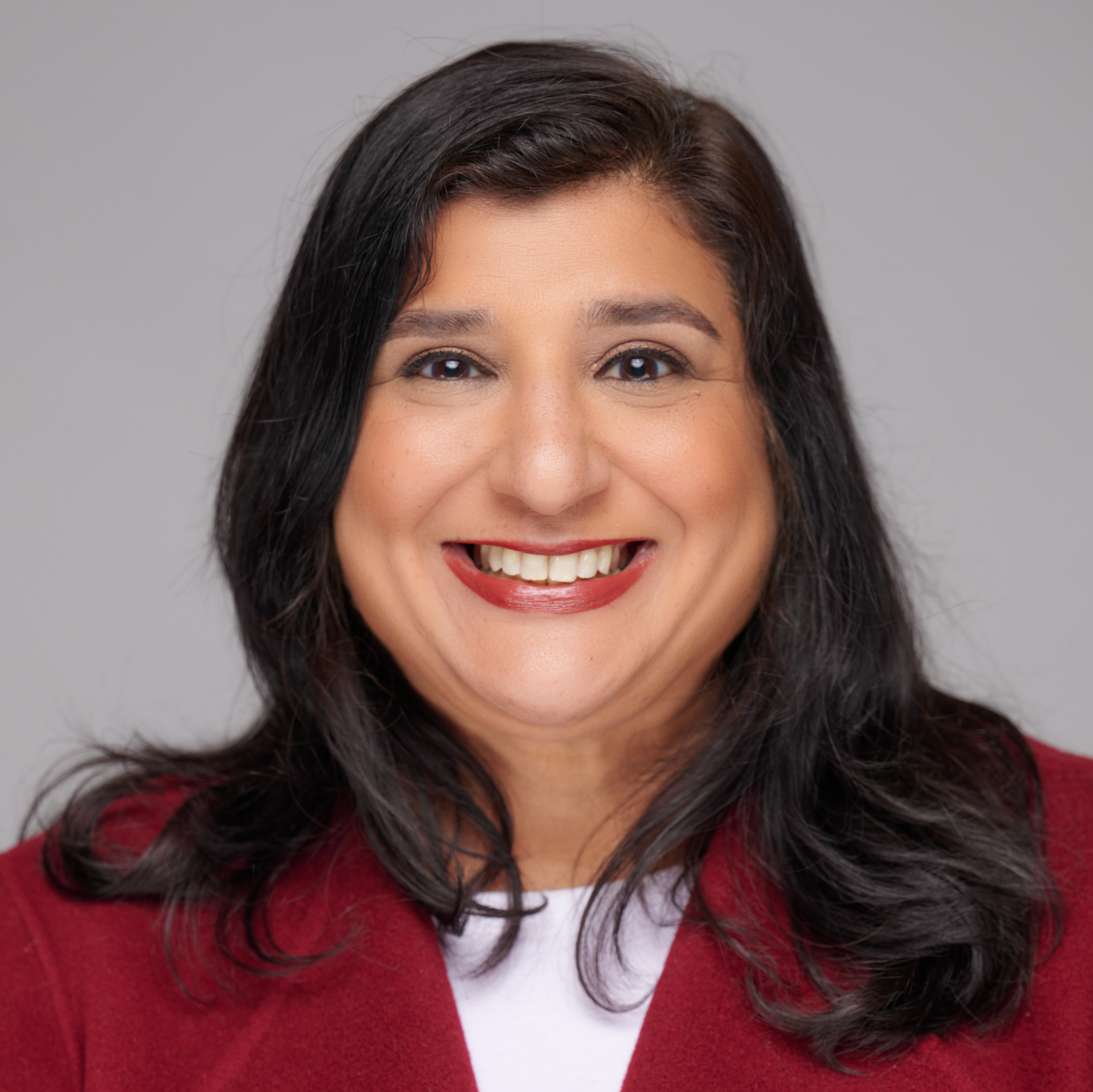
“Distrust in the media has grown, and I want to do what I can to help ensure the journalism I work on is trusted. I bring that goal to everything I do as I help nearly 600 journalists across the globe navigate complex journalistic, legal and ethical issues.” Today’s woman dreamer, Anita Kumar serves as Head of Standards & Practices for Politico, a global news and media organization. A longtime reporter and native Virginia resident, Kumar covered the White House for nine years, and she was a finalist for the Pulitzer Prize in Breaking News Reporting and a Pulitzer juror. Her mission is simple, “ Inform people about what they need to know to make decisions in their own lives about policies, politicians and government.” We are excited to share her Women Who Win interview!
1. Tell us your story. You are currently Head of Standards & Practices at POLITICO, after years as an award-winning White House correspondent and political reporter across leading newsrooms. What first drew you to journalism, and how has your mission evolved as you moved from reporting the news to shaping how it is delivered?
I was interested in two things growing up: writing and knowing everything. Journalism seemed like the perfect fit. When I was a little girl, I created a makeshift newspaper for my family, mostly with comics strips and weather, aptly called “Anita’s newspaper.” My mom still has a stack of them in a box somewhere. I was editor of my high school paper, and serving as managing editor of my college paper, the Cavalier Daily at the University of Virginia, introduced me to daily journalism. After graduation, I worked my way up from small to medium to large newspapers. I eventually worked at the Washington Post, a newspaper I read as I grew up, a longtime goal of mine.
I wanted to be a reporter, covering any beat. I fell into political reporting after covering state government in Tallahassee. I came to Washington and have been covering politics and policy ever since, ultimately working at the place for politics, POLITICO, both as a reporter and an editor.
My mission as a reporter and editor is the same: Informing people about what they need to know to make decisions in their own lives about policies, politicians and government.
2. What has been your proudest professional moment, and what personal attributes do you believe enabled you to succeed in the highly competitive and demanding field of political journalism?
I am proud of have a lot of stories on a variety of beats I covered – especially the ones that were exclusive, got a lot of attention, led government officials to change their policies, or helped people make up their minds on politicians. But one of the things I am proudest of – no matter the subject – is being fair with people. I hope what people take away from the stories I have written and edited, even the ones that have been critical of someone, is that they are accurate, clear and impartial. Distrust in the media has grown, just like distrust in other institutions, and I want to do what I can to help ensure the journalism I work on is trusted. I bring that goal to everything I do as I help nearly 600 journalists across the globe navigate complex journalistic, legal and ethical issues.
No one could have imagined the transformations in the media industry over the last few decades as people’s habits and technology changed: The demise of print, the rise of registrations and subscriptions, the popularity of social media, the creations of new products, AI. Many of the journalists I started out with have long since left the industry because they were discouraged by the changes. The only way to succeed in journalism today is to adapt – really embrace – the constant changes in reporting, writing, products, delivery.
3. AI is rapidly disrupting the news industry and the function of journalism. As Head of Standards & Practices, how are you thinking about AI practices at POLITICO, especially at the helm of a large media organization? What is one misconception people may have about AI and journalism?
POLITICO - and its parent company, Axel Springer - have been vocal about the need to leverage AI to transform and advance our publication. Like other newsrooms, we are exploring AI tools to help us in our work, including speeding workflows across teams and aiding in analyzing large amounts of data. At the same time, we know AI tools are not a substitute for engaging closely with sources, gathering original and exclusive reporting and writing in the punchy, authoritative style we’re known for.
4. How would you describe your leadership style, and how do you balance being both a steward of rigorous standards and a collaborative partner to journalists working under intense deadline pressure?
My team’s job is to help POLITICO publish the strongest, most impactful stories we can. Sometimes that can take weeks, sometimes that can take just minutes. If a story is competitive or breaking news, we need to quickly work to ensure it’s as strong as possible. No story is alike. It’s one of the reasons I enjoy the work I do because there’s such a variety in the reporting, writing and publishing of content across all departments and platforms.
We’re not just helping in real time, though. We strive every day to educate our staff on our values and standards so as they embark on a new story they know what they need to do.
5. For women aspiring to leadership roles in media, particularly in areas that influence decision-making and policy, what strategies helped you build credibility and a strong voice at the table?
I know what it’s like to be the only woman in the room. (I also know what it’s like to be the only non-white person in the room.) That’s definitely changed over the years with more women covering top beats, like the White House. But there’s still more work to be done to get women in leadership positions in newsrooms and get their voices heard when they are in those leadership positions.
Last year, the Reuters Institute released a report on newsroom leadership showing women filled only 27 percent of top editorial roles across 240 outlets in 12 global markets. It was an increase from the year before, but only a 3 percent increase.
There’s no one answer on how to get women in important leadership roles, but some of the things I have learned from other women leaders: Work hard. Be enthusiastic. Listen. Speak up. Be creative. Find allies. Collaborate. And learn to accept disappointment.
6. Many of our Women Who Win readers would be curious to learn what a typical day in the life looks like for you, and to end the day, how do you personally unplug from the 24/7 news environment?
There’s no such thing! I’m constantly juggling immediate tasks: helping reporters and editors with mistakes, complaints and potential conflicts of interests as well as long-term goals of crafting policies, language guidance, teaching the newsroom. The best part of my days are working on stories and helping make them stronger. Probably the only thing that is consistent from day to day is too many meetings (probably a familiar feeling to anyone who is a leader).
It is difficult to unplug, and I will admit that I’m not always great at it. This was especially hard when I was directing the coverage of the presidential transition, when there seemed to be news every minute of every day, often from Donald Trump’s posts on social media. It was difficult to put my phone down. But I often think about something a fellow reporter once said when we were covering Trump during his first term: The news (and lots of it) will always be there when we come back. In today’s 24-hour news cycle, there will always be more, more, more. It’s okay to not be part of it every second of every day.
Thank you Anita for sharing your story with us! We are excited to have you in our global women’s network!
Bio: Anita Kumar serves as Head of Standards & Practices across all of POLITICO’s geographies worldwide, working to ensure our journalism remains rigorously reported and edited and to uphold our editorial values in a highly polarized age. She leads a growing global standards and ethics team that works to produce ambitious journalism from inception to publication with a focus on accuracy, fairness, clarity and nonpartisanship. In addition, the team guides staffers through ethical dilemmas; develops newsroom policies and style guidelines; and oversees training and development. Prior to that, she served as senior managing editor in North America for two years, helping direct and edit overall coverage each day and oversee key reporting teams, including the White House, Congress, politics, defense, national security and legal. She helped edit a package of stories that won the George Polk Award for National Reporting and was a finalist for the Pulitzer Prize in Breaking News Reporting. A longtime reporter, Kumar covered the White House for nine years, reporting on Joe Biden, Donald Trump and Barack Obama at POLITICO and, before that, for McClatchy’s chain of newspapers. She joined POLITICO as White House correspondent and associate editor in 2019, helping organize and guide coverage for the White House team and serving as an in-house expert on the institution of the presidency. She reported on Trump’s reelection campaign in 2020, Hillary Clinton's campaign in 2016 and Obama's reelection campaign in 2012. Before that, she worked at The Washington Post, writing about Virginia politics, and The Tampa Bay Times, writing about local, state and federal government both in Florida and Washington. She started her career at The News & Advance in Lynchburg, Va., and worked briefly at The News & Record in Greensboro, N.C. Kumar serves on the Poynter Institute’s National Advisory Board. She has served on the boards of the White House Correspondents' Association, the National Press Club Journalism Institute, the Regional Reporters Association and the Virginia Capitol Correspondents Association. She also has served as a Pulitzer Prize juror. A native Virginian, Kumar grew up in Charlottesville and attended the University of Virginia, where she was managing editor of the Cavalier Daily.