
The Power of Mother-Daughter Legacy: Denella J. Clark on Faith, Philanthropy, Family, and Love
"What shaped me and who I am today is really my mother, Pastor Pearline James. My mother was a pastor. She is where I first learned the importance of philanthropy. The meaning of philanthropy is the love of humankind." Denella J. Clark is the President and CEO of the Boston Arts Academy Foundation, a proud Jamaican immigrant, and a leader in Boston's nonprofit community. She is also a daughter shaped profoundly by the love, faith, and fierce generosity of her late mother, Pastor Pearline James. For Mother's Day, we are honored to share the relatable and inspiring story behind what motherhood means to Denella.
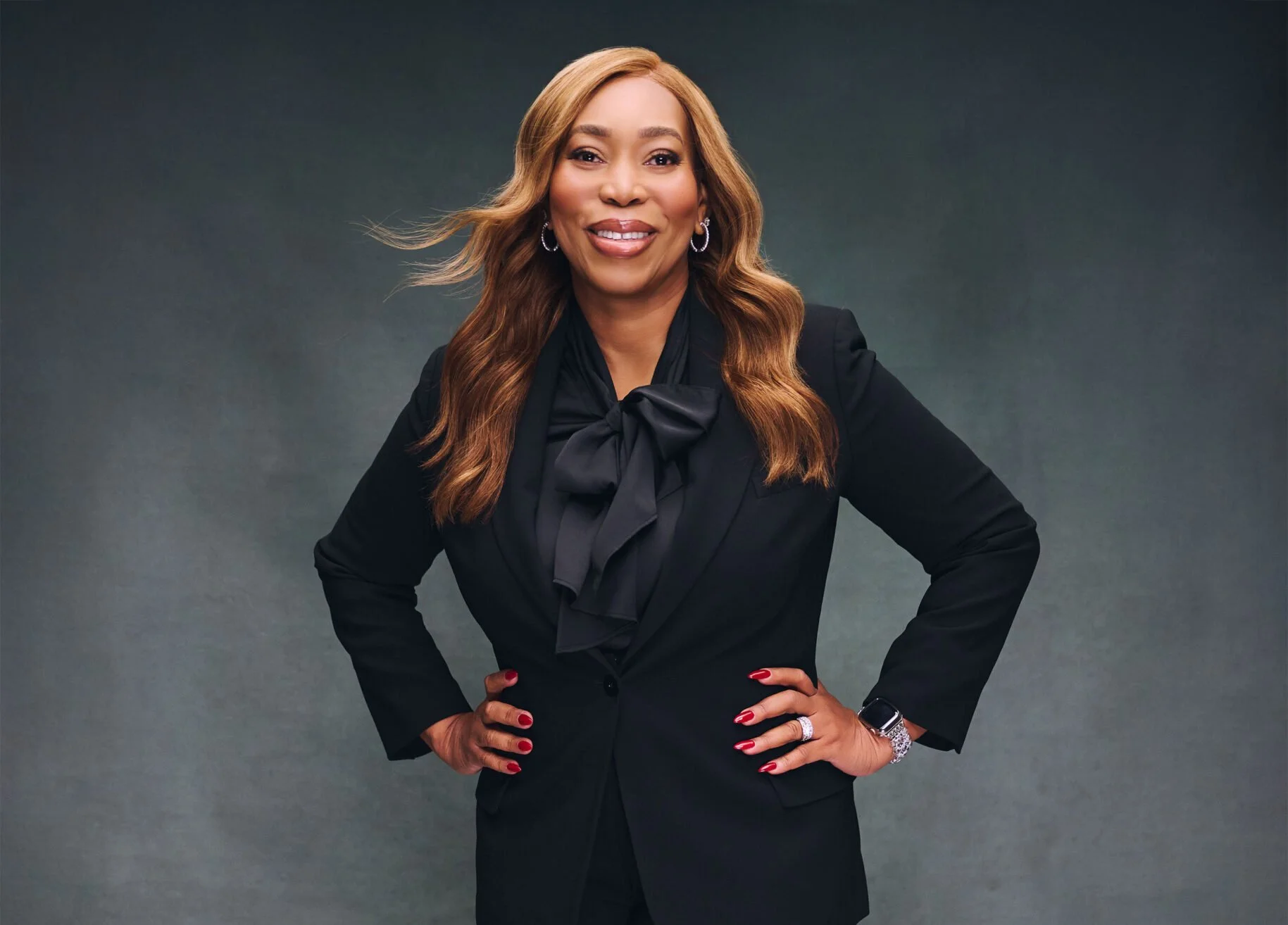
1. Tell us more about your story. As the president and CEO of the Boston Arts Academy Foundation, and a proud Jamaican immigrant, and a leader in the Boston nonprofit community. What were the early experiences in your life that shaped your sense of purpose and commitment to giving back?
What shaped me and who I am today is really my mother, Pastor Pearline James. My mother was a pastor, but also a fierce cook, somebody who did a lot of cooking. And honestly, it is where I first learned the importance of philanthropy. The meaning of philanthropy is the love of humankind. It's all about humanity and giving back.
I would watch my mother use her kitchen as a gathering place, not only to hear people's stories, but to figure out how she could help others, how she could be intentional in showing up and helping people. So before I ever knew what fundraising was, or philanthropy, I knew what love was, through the work that my mother did. She shaped my purpose and shaped who I am today. I certainly stand on her shoulders.
2. Your mother was a pastor and brought so many lessons into your life. What is the biggest life lesson you learned from her, and is there a lesson she taught you that maybe you didn't fully realize at the time?
She taught me so many lessons, but I think the biggest thing she taught me was the importance of giving back and caring for others. My mother was a caregiver by her very nature. She cared for her four children, cared for her husband before she passed away, and for 37 years ran a large family child care.
Because of the love I saw her show to others, and her dedication to giving back to caregivers, on the first anniversary of her death I launched a fund called the Lovin' Gestures Fund. I came up with the name "Lovin'" because my mom had a catering company that she called "Loving Spoonful," where she made Jamaican cuisine and sold dinners to raise money for her church.
The purpose of the Lovin' Gestures Fund is dedicated to providing small grants for individuals who are caring for an immediate family member. All we ask is that the person take the money and use it for themselves, a spa day, self-care, respite, to do something kind for themselves. Because what I discovered, as my mother was terminally ill and dying from multiple myeloma, is that caregiving is a lot of work. Having to take someone back and forth to chemotherapy, it's sleepless. You don't get any rest. You don't get to care for yourself.
That's what she taught me: the importance of caring for others and the importance of giving back, no matter if sometimes you don't even feel like you're getting a reward for it. She just really taught me that this is what we need to do and what we should be doing.
3. Having watched your mother lead in faith and service, how do you think about womanhood, strength, and responsibility?
For me, faith is really grounding. There are so many biblical scriptures that you can lean back on when things get tough. It gives you that extra fuel to keep going when things are hard.
When I think about us as a family, my only brother, my mother's only son, was murdered. They put three bullets in his back. That happened 100 yards from my parents' house. And my mother said, "I'm not moving, in case the murderer ever decides to come and apologize." He never did, but my dad still lives there today.
Having faith affords us the opportunity to forgive. It also affords us the opportunity to lean on something other than our own strength. I remember when my mother was dying, because she knew she was going to die, she knew it was terminal. She was more worried about us, particularly my dad. And she said, which is a Bible scripture: "Whatever my lot, thou hast taught me to say, it is well with my soul."
4. How are you keeping her legacy alive?
On June 26, 2025, the second anniversary of her death, I asked my good friend Mayor Michelle Wu to rename the street we grew up on, where my mother's house still stands. We were the first Jamaicans to buy in Mattapan, which at the time was an all-Jewish neighborhood.
The mayor not only named the street Reverend Pearline B. James Way, she also declared June 26, 2025, Pastor Pearline James Day in the city of Boston. My mother may very well be the only Jamaican woman to have that kind of honor. Even when we're gone, family members who weren't able to be there that day, when you turn onto that street, my mother's name will be there in perpetuity.
And this year, she would have been 80 on January 27th. So on May 9th, Mother's Day weekend, I'm having an 80th birthday celebration for her that will also be a fundraiser for the Lovin' Gestures Fund, where we're giving out the Lovin' Award. The whole thing is making sure we do whatever we can to keep her memory and her legacy alive in really significant ways.
5. You were the first woman of color to chair the Massachusetts Commission for the Status of Women. What is your advice to women, and how do you think about your own legacy as you look at your daughter?
When I was sworn in, my mother and my daughter were there when Governor Charlie Baker appointed me. My advice to women, especially now that I'm in my late 50s, is to make sure that you take care of yourself while you're taking care of everybody else.
Women in particular, we do so much for others that we sometimes neglect ourselves and our own health and well-being. I really believe my mom would have probably had more time, but my dad had been diagnosed with Alzheimer's in 2019, and I feel like she was so focused on his care that she may have missed some of the signs that could have given her more life.
We feel like we can have it all. But I agree with Michelle Obama: I don't believe women can have it all, not at the same time. We're going, going, going so much that we're not taking care of ourselves. The number one health issue for women is cardiovascular disease. A lot of women have heart attacks early and at a young age. My own mother had a heart attack at 57.
So my advice: practice self-care. Take care of yourself. Try to let go of things that aren't important. Balance.
6. What's your top tip for actually finding that balance?
I love a spa. When I turned 50, I made a decision that I was going to get a massage once a month. If I'm traveling somewhere, I'm getting a massage and a facial. Some people think it's odd, how can she spend five hours in the spa? But this past Monday, which was a holiday, I was in the spa for five hours. I got a 90-minute massage, a 90-minute facial, my phone was down, and I took care of all the things.
I'm all about taking care of myself. People look at you and they don't know your story. People will look at me and say, "Oh, she has on nice shoes." Well, what you don't know is I immigrated to this country at nine, and when I came here, I didn't have shoes. In Jamaica, we didn't wear shoes. My sister has four toes on one foot because a nail went into her foot, because we didn't have shoes.
Now that I can have good shoes, I'm going to have good shoes. There's a meaning behind it.
7. Speaking of meaning, is there a story from your childhood that captures who your mother was?
When I was younger, and you may remember this era, there were Calvin Klein jeans, Gloria Vanderbilt jeans. I came home from my suburban school and told my mother I wanted a pair. She said, "Okay, I'm gonna get you some jeans."
Two weeks later, she hands me a paper bag, because that's how we did it in Jamaica. I open it up, and inside are plain-pocket jeans from JCPenney or Sears. But my mother was also a seamstress. She had embroidered, by hand, my name into the jeans.
I was furious. I asked for Calvin Klein. I asked for Gloria Vanderbilt. And you know what she told me? She said that the name she gave me was just as good as the name that Calvin's and Gloria's parents had given them.
At first, I was so angry I didn't come out of the house for weeks. But my two best girlfriends, Leah, who's Irish, and Desiree, who's Cape Verdean, their mothers ended up buying them jeans too, and my mother embroidered their names on them as well. Then we all went outside, and everyone was asking, "Can your mother do my jeans too?"
She was a trendsetter. And that lesson has stayed with me. She said the name she gave me was just as good as any designer name. Think about it, that instills a confidence in you as a young person that you carry forever. I've carried that down to my daughter: your name is important. You can do anything.
8. Finally, tell us about your upcoming book. My book, Pastor Pearline's Philanthropic Kitchen, is both a heartfelt tribute to my late mother and a practical guide grounded in the lessons she taught me about leadership, service, and community care. While the book shares personal stories and recipes that reflect her belief that the kitchen was a sacred space for fellowship and generosity, it also offers instruction and insight on building community, leading with compassion, and mobilizing resources to support others.
Through storytelling and lived experiences, the book provides guidance on leadership, philanthropy, and fundraising, demonstrating how everyday acts of service can inspire collective action and sustainable impact. It is designed to encourage readers, nonprofit leaders, faith communities, and emerging changemakers to think differently about giving, stewardship, and the power of community-centered leadership.
At its core, the book honors a legacy of faith and generosity while serving as a roadmap for those who want to lead, give back, and make a meaningful difference in the lives of others.