
From Caregiver to Founder: Sheeba Ameer on Creating Solace for Families Navigating Childhood Cancer
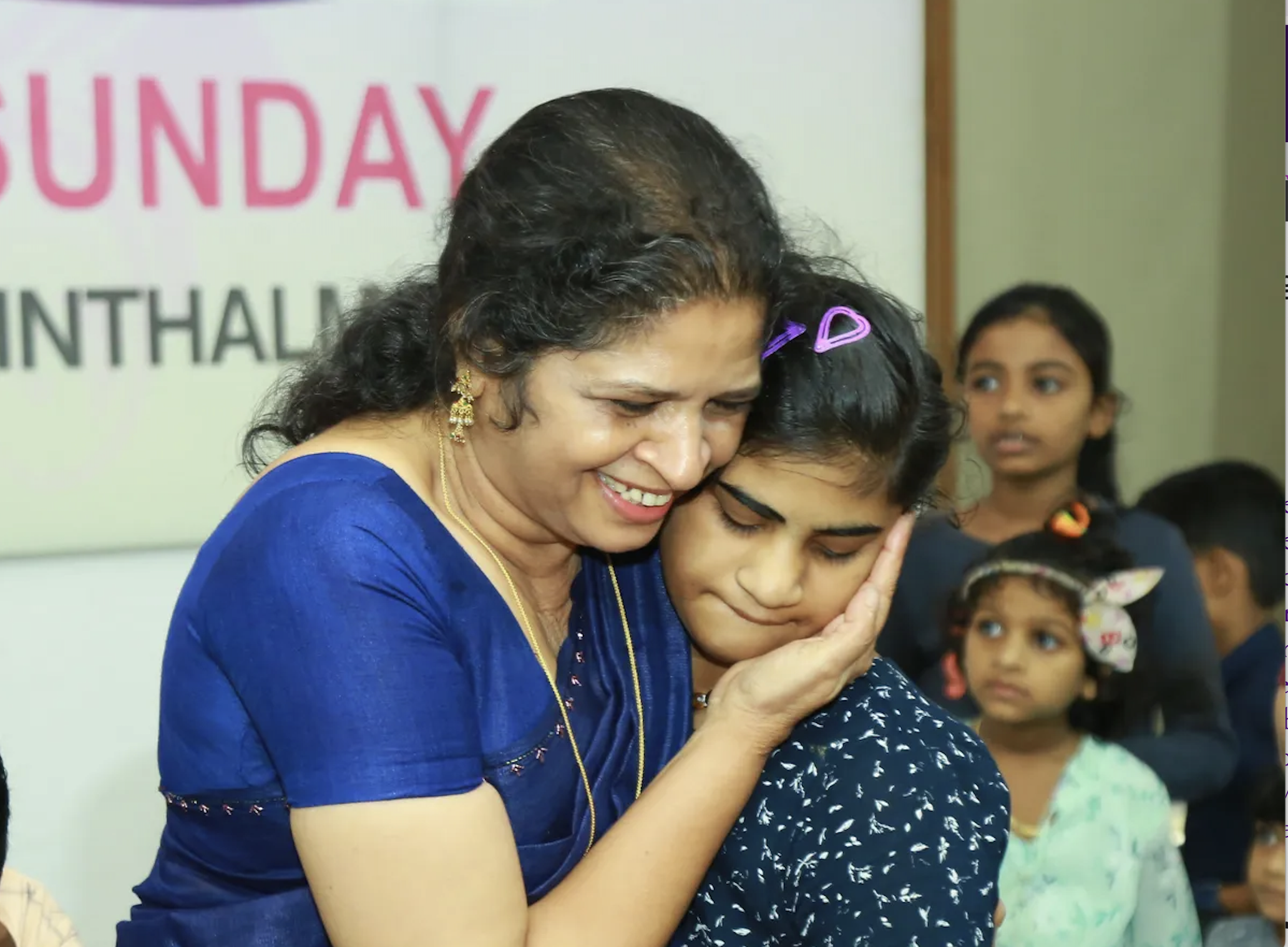
“I was seeing hundreds of helpless mothers. Now I see thousands. Many are abandoned by their husbands while they are struggling to care for a sick child. Today, we support 5,600 children and their families and in nearly 40% of those cases, the father has abandoned the mother and the child.” Today’s woman dreamer Sheeba Ameer is the founder of Solace Global, a Kerala-based charitable trust providing curative and palliative care to children with long-term illnesses and their families. In this interview with Women Who Win, she shares the moment that changed her life, how her personal journey led to the founding of Solace, how the organization has grown to support thousands of families across Kerala and beyond, and what mothers facing illness, poverty, and abandonment need most and rarely say out loud.
Tell us your story. You were born and raised in Kerala, and your journey as a mother, including your daughter’s diagnosis with blood cancer, became a defining turning point in your life. Can you share more about that experience and how it ultimately led you to found Solace Global?
I was born and brought up in Kerala, in Kerala’s cultural capital, Thrissur. My father is a radical humanist and my mother is a believer. I married at the age of 18 to a marine biologist who was working in Qatar. His name is Amir Ali, and I gave birth to my son and my daughter. When she was 13, she was diagnosed with AML, acute myeloid leukemia, a dangerous blood cancer. When we received the diagnosis, it was a shocking moment for our family. The doctors said that the only solution for her treatment was a bone marrow transplant. This was in 1998, nearly 25 years ago, and bone marrow transplantation was a very costly and risky treatment at that time.
We flew the very next day to Tata Memorial Hospital in Mumbai. She went through chemotherapy and consolidation before the bone marrow transplant. Fortunately, my son Nikhil’s marrow was a 100% match for my daughter, and the transplant was successful. We spent nearly three years there between chemotherapy, consolidation, transplantation, and hospital stays. Sometimes we stayed in a house near the hospital, and sometimes we were admitted inside. That period was the turning point of my life.
The 11th floor of Tata Memorial Hospital is the pediatric ward. There I saw hundreds of parents who did not have money to treat their children. I saw parents who could not even afford to feed their child and who did not know if their child would survive the next day. I saw many mothers who could not sit with their sick child when the child was in severe pain because they were hopelessly working to make ends meet. I saw many parents who could not save their child simply because they were poor. In our case, my husband, our family, and our supporters stood with my daughter. We were in a position where we could afford to do everything that money and medical science could do. Seeing the disparity between rich and poor was shocking to me. I realized that the worst helplessness a human being can experience is when their child is diagnosed with a life-threatening disease and they do not have the money to treat or save them.
I began thinking about what I could do for these sick children and their helpless parents. That realization became the turning point of my life. From that time at Tata Memorial Hospital, I decided that I had to do something — to find a solution to this crisis. That is where the name Solace came from. After my daughter’s treatment, we returned to Kerala. At that time, my daughter was confined to a wheelchair due to the effects of immunosuppressive medicines and steroids, which caused both of her hips to collapse. Managing my daughter’s condition was already a major challenge, but I could not forget the parents and children I had seen suffering. That was in my mind - how can I help them? I felt a strong urge to start Solace as soon as possible.
2. As a mother who has walked this journey herself, how does Solace Global support other mothers in similar situations, and what are some of the unspoken challenges these families — especially mothers — face?
As a mother who has walked this journey herself, I went through all of this, but my position is comparatively better after starting Solace. Before that, I was seeing hundreds of mothers — now I see thousands — who are totally helpless. Many mothers are abandoned by their husbands while they are struggling to care for a sick child.
Nowadays, we are supporting 5,600 children and their families, and in nearly 40% of those cases, the father has abandoned the mother and the child. This is a very difficult situation. These mothers cannot go to work because they cannot leave the sick child at home. They have to look after the child and manage the treatment, hospitalization, and everything involved — not only for cancer, but also for other serious illnesses like thalassemia, which requires frequent blood transfusions, and nephrotic syndrome, which is a kidney condition. There are many severe, life-threatening diseases, and these mothers cannot leave their children alone. They are always with the child.
Because the father has abandoned them, this becomes a very serious problem for these women. We support them by providing medical support to cover the costs of treatment, and by giving grocery kits that can support the mother, the sick child, and sometimes another sibling for about one month. If needed, we also support transportation to the hospital for treatment. If they cannot afford to pay rent, we help with rent so that the landlord does not force them to leave.
Otherwise, where can this mother and child go? Often, the parental home is not welcoming to a woman with a sick child, because it is seen as a double burden on the family. So they are not welcomed back.
We support them in every aspect — medical, social, and practical. In some cases, the father is still present but does not care for the child or provide support, and may also struggle with alcoholism, leading to domestic violence. In those situations, we help the mothers by involving the police and providing support.
Sometimes, if a mother has nowhere safe to go with her sick child, we provide space in our respite center. She and her child can stay there for three or four months while a solution is found. We provide food and basic needs so they can live there comfortably.
3. Solace Global works with organizations and communities in both India and the United States. How do you build strong partnerships in these two countries?
We work with organizations in the U.S and India. About nine years ago, I was invited to the United States to receive donations from a Christian church. I first came to Dallas to St. Alphons Church and later had a meeting in San Francisco. During a Q&A session, people were very moved by Solace’s work. Many of them were Keralites living in the U.S., and they wanted a way to support children back home in Kerala.
They decided to start Solace chapters in the U.S. so that people living abroad could support children in their home communities. Many supporters from the U.S. visit Solace in Kerala and have built strong relationships with our team.
We now have six active chapters in the U.S.: Boston, Dallas, San Francisco, Charlotte, Washington D.C., and Seattle. We also have chapters in the U.K. and a small community in Canada. These partnerships exist because of trust, transparency, and a shared commitment to helping sick children.
4. Your work has been recognized through important honors. You were the inaugural recipient of the V. T. Bhattathiripad Award, and you also received the Avani Bala Award in literature for Nadannu Poy. What are your next goals and milestones you hope to achieve for yourself and for Solace Global?
Currently, we have centers in 10 districts of Kerala. Kerala has 14 districts in total, so one of our goals is to expand into the remaining districts as well. We also have a respite center and a physiotherapy center in Thrissur and in Trivandrum, and we want to establish these centers in more districts for sick children.
Finally, while we are supporting children during their treatment, most of them receive care in government medical colleges or government hospitals. In many cases, the facilities there are limited — there may not be clean common bathrooms, clean beds, or adequate care, and government hospitals often cannot offer the same facilities as private hospitals. We support these children as much as we can, but we know that the treatment poor families receive is very different from what wealthy families can access.
So our ultimate goal is to build a pediatric international hospital that can provide the same quality of treatment and care to poor children that wealthy children receive.
5. With many folks looking to get involved in charitable and philanthropic causes in the new year, how can people support this work?
In the beginning, I started this organization to support a few children, only 10, 20, or at most 30 children. I thought that if I could get 30,000 or 50,000 rupees, I could help five or six children with cancers like that. Today, we have supported more than 7,000 children. Some have grown older, and some unfortunately passed away, but we are still actively supporting more than 5,600 children.
We now spend about 6 crore rupees every month ($660,000-$670,000 USD). A large portion of this comes from the United States. The culture of giving in the U.S., especially around Thanksgiving and charitable seasons, is very strong, and that generosity has been a major support for us. About 3 crore of our monthly funds come from the U.S. alone, and I am very grateful for that.