
Physician and Changemaker: How Dr. Abha Agarwal Is Revitalizing Hospitals and Advancing Equity in Care
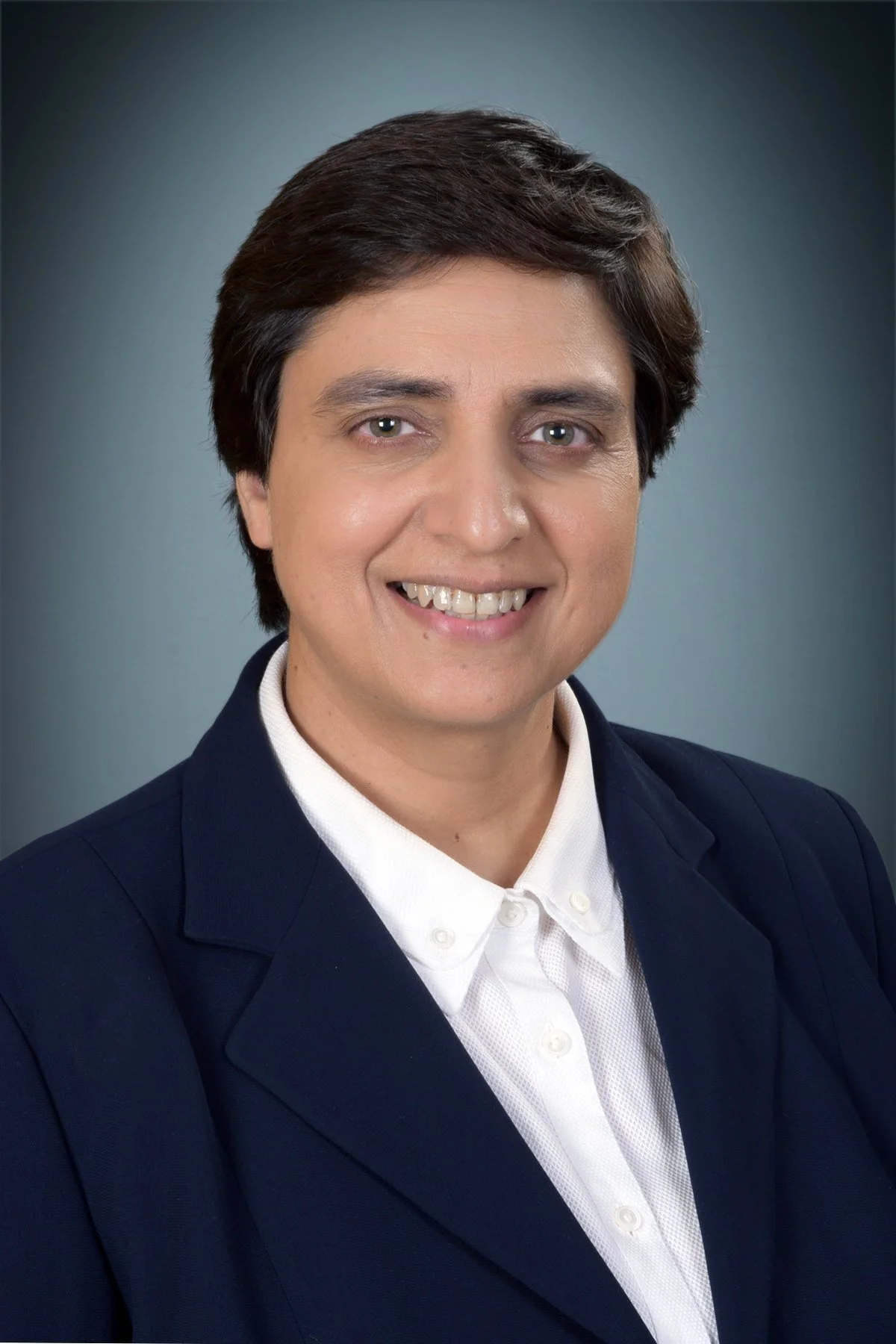
“I truly believe that while we do many things in life, what matters most is understanding our ‘why.’ Today’s woman dreamer, Dr. Abha Agarwal, is a healthcare executive specializing in health system turnarounds and access-driven transformation. She is currently the founder of two impact-driven ventures, North Star Hospital and Bharat Oncology. Previously, Abha served as President and CEO of Lawrence General Hospital and Holy Family Hospitals and has led hospital turnarounds across the U.S., including in New York and Chicago. Rooted in clinical care, Abha has moved from the bedside to system-level leadership in service of access, dignity, and equity in care. In this interview with Women Who Win, she reflects on what shaped her journey and how she is translating purpose into impact.
1. You’ve had an incredible career as a clinician, hospital leader, healthcare advocate, and now an entrepreneur. Tell us your story. What experiences shaped the work you’re doing today?
I grew up in a small town in India, and that deeply shaped how I see the world. My universe was very local and very human. I grew up speaking Hindi, loving Hindi literature and plays, and being surrounded by a strong sense of community and responsibility.
I went to medical school in India, and then I came to the U.S. for residency because I was, in many ways, chasing liberty, both personal and professional. I served my residency at the State University of New York in Brooklyn NY, and then moved to Colorado for my first job. I thought the whole country would feel like New York, so Colorado was a culture shock, but a beautiful one. It became one of the most meaningful periods of my life. My patients brought me cookies and crocheted throws. I feel very grateful I spent a few years there as a clinician. After that, I pursued a fellowship in informatics at Yale School of Medicine. Those early experiences taught me that healthcare is not just about medicine. It is about trust, access, and belonging. At that point, I determined that if we were going to transform healthcare, technology was going to be crucial for that.
“I truly believe that while we do many things in life, what matters most is understanding our ‘why.’ To me, life is a series of actions, all connected under that same purpose, rather than random events. It is important to find that connecting theme in your life, and ask yourself, “am I making an impact here?”
2. You pursued informatics at a time when healthcare and technology were viewed as two different chasms. What inspired you to pursue this path when the technology and healthcare overlap was not as prevalent as it is today?
When I entered informatics, it truly felt like two different planets trying to communicate. But I was drawn to that tension. I came across Dr. Bernard Lown, a Nobel laureate who was working at the interaction of healthcare and IT. He was known as the original developer of the direct current defibrillator for cardiac resuscitation. When I met with him, he had offered me to work with him after my fellowship. I joined Dr. Lown at his practice and was appointed as an attending physician at Brigham and Women’s Hospital and Clinical Instructor at Harvard Medical School. Dr. Lown instilled in me a profound sense of social responsibility as well as a deep love of the art of healing as a clinician.
3. You’ve spoken about your love for clinical work, going the extra mile even when you were not on call. At the same time, you became an expert in hospital turnaround and systems leadership. What prompted your desire to improve healthcare at the systems level?
During my residency, I was a hard core clinician. I’d run to every code blue even if I was not on call. I liked learning everything about the hospital system - things that were happening upstream in systems, infrastructure, and design. I realized that if we were ever going to transform healthcare at scale, technology had to be part of that transformation.
In 2004, I moved back to New York as a Chief Medical Information Officer at New York City Health and Hospitals - Kings County Hospital, a large academic medical center and a level-1 trauma center in the heart of Brooklyn, NY. Later I was appointed as the Chief Medical Officer at the same hospital and Senior Associate Dean at SUNY Brooklyn, Then I was recruited to Chicago to help turn around a hospital on the verge of bankruptcy. After that, I was recruited to Massachusetts to become the President and CEO of Lawrence General Hospital. In MA, I led the acquisition of Holy Family Hospitals after securing the support and funding from the Commonwealth of MA. In 2025, I launched two ventures - both focusing on solving the challenges of access, affordability and equity.
4. Now you’re focused on healthcare entrepreneurship, with two ventures, North Star Hospital and Bharat Oncology. How do you hope to expand access and equity through these ventures, and how do you manage building two at the same time?
North Star Hospital exists to revitalize distressed hospitals, especially in rural and underserved communities through acquisition, strategic investments and performance transformation. I found that hospitals are also economic anchors to a community. A hospital closure, especially in rural communities, would have devastating impacts on the local population. When a hospital closes, people lose access to care, jobs disappear, and entire communities weaken. Hospitals are in a way community economic anchors and a dollar invested in hospitals provides $2.30 in returns. So I believe revitalizing distressed hospitals is truly about preserving access to care as well as positive impact on communities
The second venture, Bharat Oncology focuses on expanding access to high quality, affordable, evidence-based cancer care close to home in small cities and towns in North India. While large metropolitan cities like New Delhi and Bengaluru boast state-of-the-art cancer centers, patients in smaller towns often have to drive over 100 kilometers and hours just to access chemotherapy services. We are addressing this disparity by bringing affordable care close to home for these patients. Our first center was launched in Kurukshetra, Haryana in October 2025 and our goal is to build five to ten centers by 2026 and to offer affordable, high quality care that accepts all insurance. Additionally, cancer screening rates in India are extremely low and we plan to partner with local communities to improve screening for cancers such as breast, cervical and head and neck cancers.
As for managing two ventures, I say it's important in life to first think about your “why” (what is the problem I am passionate to solve?), then think about the “how” to get there. The “how” is the daunting part. In my case, these two ventures are deeply connected through my overarching mission in healthcare access and advocacy. One focuses on preserving access. The other focuses on expanding it. That shared purpose makes the work feel coherent, not divided. Helping others becomes the connecting thread.
5. How do you find inspiration, especially in challenging moments?
I am inspired by stories of perseverance, like Diana Nyad swimming from Cuba to Key West at the age of 63 and refusing to give up even after four unsuccessful attempts. That kind of tenacity reminds me that meaningful change is rarely fast or linear, but it is possible. Nyad’s quote, "Whatever your Other Shore is, whatever you must do, whatever inspires you, you will find a way to get there," has been a source of daily inspiration for me.
6. Outside of your work, what hobbies and passions do you enjoy exploring?
I love the Hindi language, having grown up in a small community, especially Hindi literature and plays. I love the richness of the vocabulary. I also enjoy playing tennis, swimming, meditation, and reading books.