
Creating Clarity: Rangeeta Khetan on Strength, Service, and Leadership
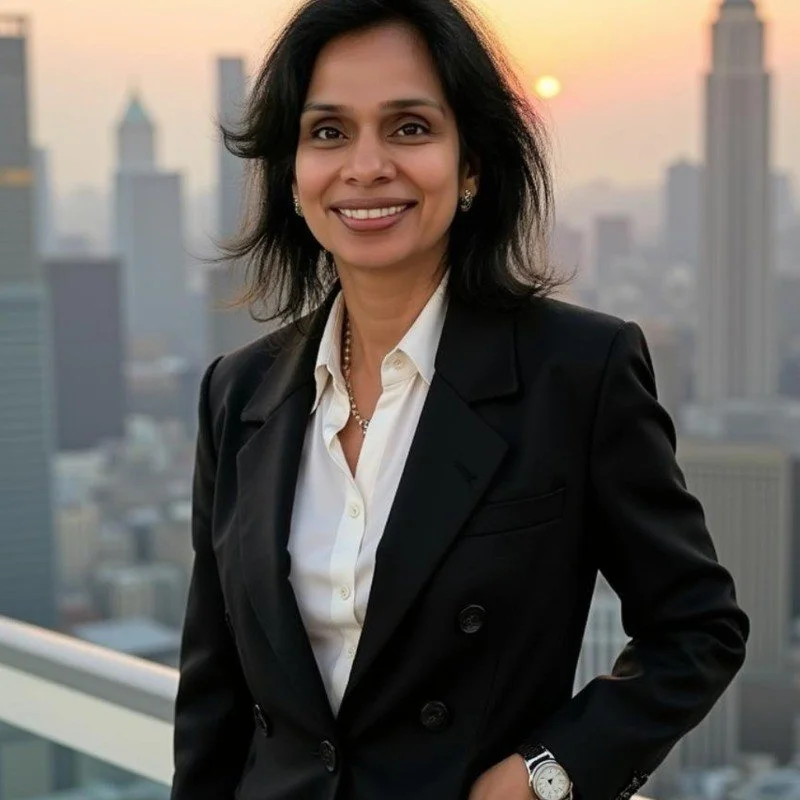
“I am more grounded, more purposeful, and more aware that real strength is not just about pushing through adversity.” Today’s woman dreamer, Rangeeta Khetan, is a Digital Transformation Leader with 25+ years of global experience across IBM, National Grid, and now Scheidt & Bachmann, with a deep passion for AI innovation and giving back to the community. In her Women Who Win interview, she opens up about her breast cancer journey and the loss of her mother. She also reflects on her career and community service journey, and how her experiences have shaped her legacy and who she is as a leader today.
1. Tell us your story. You previously held managerial roles at IBM and are now driving digital transformation at Scheidt & Bachmann. How did you first discover your interest in digital transformation, and how has that passion shaped your career journey across these organizations?
My journey into digital transformation wasn’t a single moment—it evolved through experience. At IBM, I was exposed early to large-scale systems, global delivery, and the complexity of aligning technology with business outcomes. What stood out to me was that transformation wasn’t about technology alone—it was about reimagining how systems, people, and processes come together.
At Scheidt & Bachmann, that perspective deepened. Working in transit and mobility, I’ve seen firsthand how digital transformation directly impacts real-world experiences , millions of passengers, operational reliability, and public infrastructure. What drives me is solving systems-level challenges bringing clarity to complexity, improving resilience, and enabling organizations to evolve with confidence in a rapidly changing world.
2. How would you describe your leadership style, and how do these attributes influence the way you build teams and drive large scale transformation?
I would describe my leadership style as structured, empowering, and systems-oriented.
I focus on creating clarity—clear goals, clear accountability, and clear pathways for execution. But equally important is building an environment where people feel trusted to think, challenge, and lead.I don’t believe in centralized decision-making in complex environments. The best outcomes come when teams are empowered to operate with context, not just instructions. In large-scale transformation, my role is less about directing every move and more about designing the system in which great decisions can happen consistently.
3. As organizations accelerate their digital transformation journeys, AI is becoming central to decision making and operations. How do you think about AI ethics in this context, and how do you think about AI in the context of your transformation work today and as it evolves in the future?
AI is fundamentally reshaping how organizations operate, but with that comes responsibility. For me, AI ethics is not a separate conversation—it is embedded in how we design systems. It’s about transparency, accountability, and human oversight.
In transformation work, I see AI as an accelerator—not a replacement. It enhances decision-making, improves efficiency, and uncovers insights at scale. But the guardrails matter: ensuring data integrity, avoiding bias, and maintaining trust.
Looking ahead, the organizations that succeed will not be those that adopt AI the fastest—but those that integrate it responsibly, with strong governance and human-centered design.
4. You had gone through a challenging health journey with cancer, and navigated that with remarkable strength. How did that experience reshape your perspective on resilience, purpose, and the way you lead today?
My cancer journey changed me, but perhaps not in the way people would expect.
When I was diagnosed with Stage 1 breast cancer, I did not respond with fear. Six years earlier, my mother had been diagnosed with Stage 3 cancer, and she was still alive, active, and healthy. So in my mind, cancer did not immediately feel like the end of life. In fact, I was so calm that the day after my breast cancer surgery, I took my children on a planned family trip to Vermont. For me, that reflected something fundamental about who I am: I choose to give my energy to what matters most. I chose my family over fear, and in many ways that helped me carry the pain differently.
I went through surgery and radiation, and physically I recovered well. The deeper emotional shift came later, when my mother’s cancer became metastatic. That was the moment I truly began to study cancer—not only medically, but holistically. I started exploring stories of people who had survived against the odds, and I learned from integrative voices like Jane McLelland and Chris Wark, who emphasized not just treatment, but the importance of understanding the body’s internal environment, lifestyle, and self-discovery in healing.
By the time I had begun to understand more deeply what was possible, we lost my mother in a traumatic and heartbreaking way. She passed in our hands after choking, and that experience changed me forever. It was then that resilience became more than endurance. It became purpose.
Since then, I have felt called to share what I’ve learned and help point others in the right direction not from fear, but from hope, clarity, and action. My mother stayed alive far longer than many would have expected, and I believe lifestyle, mindset, and supportive therapies played a meaningful role in that. Her journey taught me that while cancer is serious, what matters just as much is the environment in which it lives and that there are ways to change that environment.
Today, 2.5 years later, I live a completely normal, healthy life. That experience shaped the way I lead. I am more grounded, more purposeful, and more aware that real strength is not just about pushing through adversity. It is about choosing what matters, staying calm in uncertainty, and helping others find direction when they need it most.
5. You are deeply engaged in giving back, including your work with local Lexington schools. What motivates your commitment to community impact, and how do you view this as an extension of your leadership?
For me, community work comes from a sense of responsibility more than anything else.
What motivates me is a very simple feeling: if something affects children, families, or the future of a community, I don’t want to stand on the sidelines.
A lot of my community involvement comes from being both a parent and someone who naturally tries to bring structure when things feel unclear. In Lexington, whether through my role as LHS PTO President or through the educational series around the high school rebuild project, my motivation has been to help people feel more informed, included, and less overwhelmed.
I see this as an extension of my leadership because, to me, leadership is not only about delivering results in an organization. It is also about service.
6. What is the legacy you hope to build, both professionally and in the communities you serve?
The legacy I hope to build is one of meaningful impact and enduring systems.
If I can contribute to shaping systems and people that continue to grow and create value long after I’ve moved on, that would be a legacy worth building.